Ireland '23 - Day 3 - Dublin again
return to Ireland 23 index
return to mdimage index
On Sunday, after another impressive early breakfast, I knew the Archeology Museum would not open until 1 pm, so I read the Judge's book for awhile, with coffee. Outside on Harcourt, morning sunbeams were thin & few, even at 9 am.
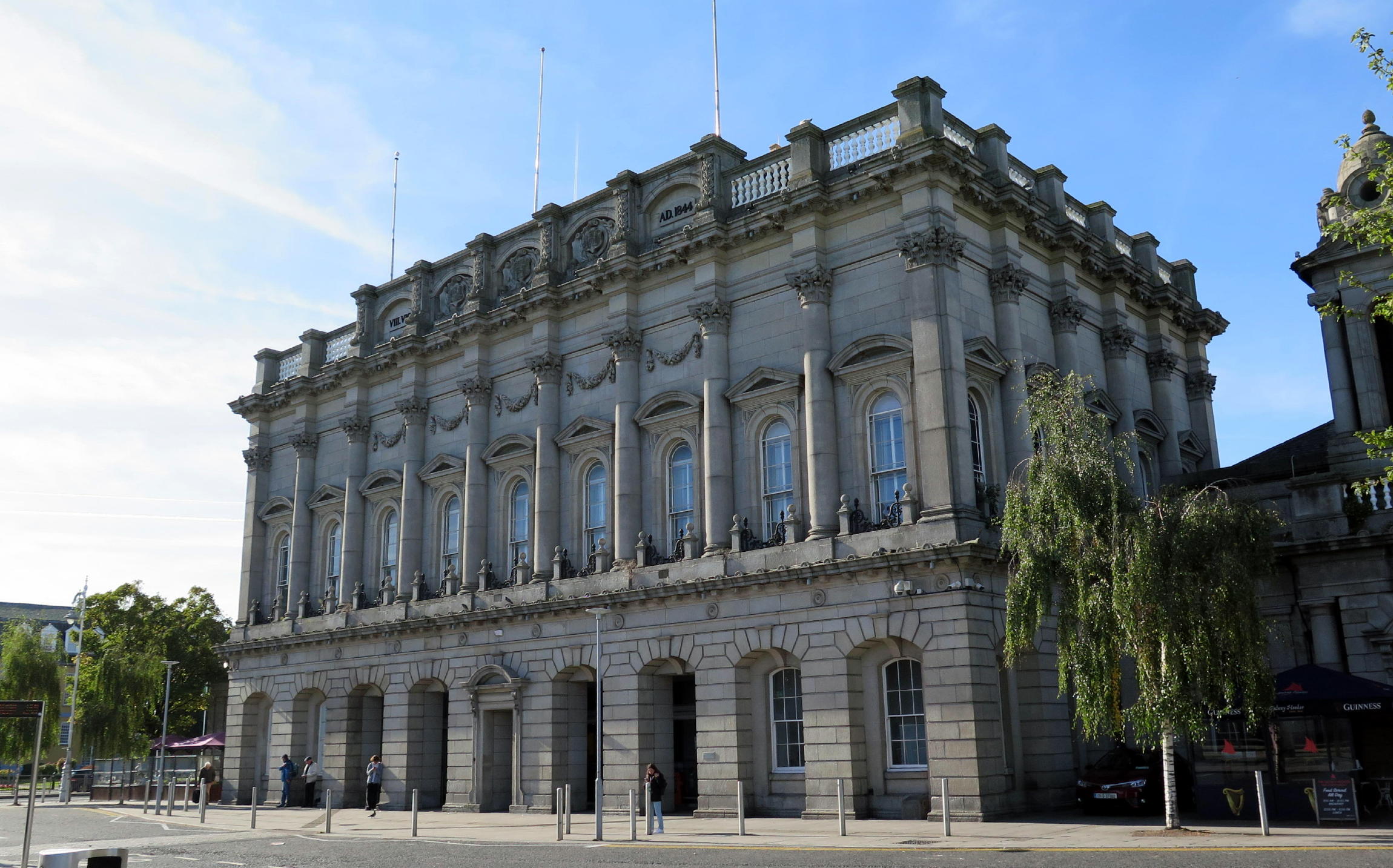
Around 10 am I took a meandering walk across the City in a NW direction, once again finding the Liffey & following it west to Heuston Station (Irish Rail).
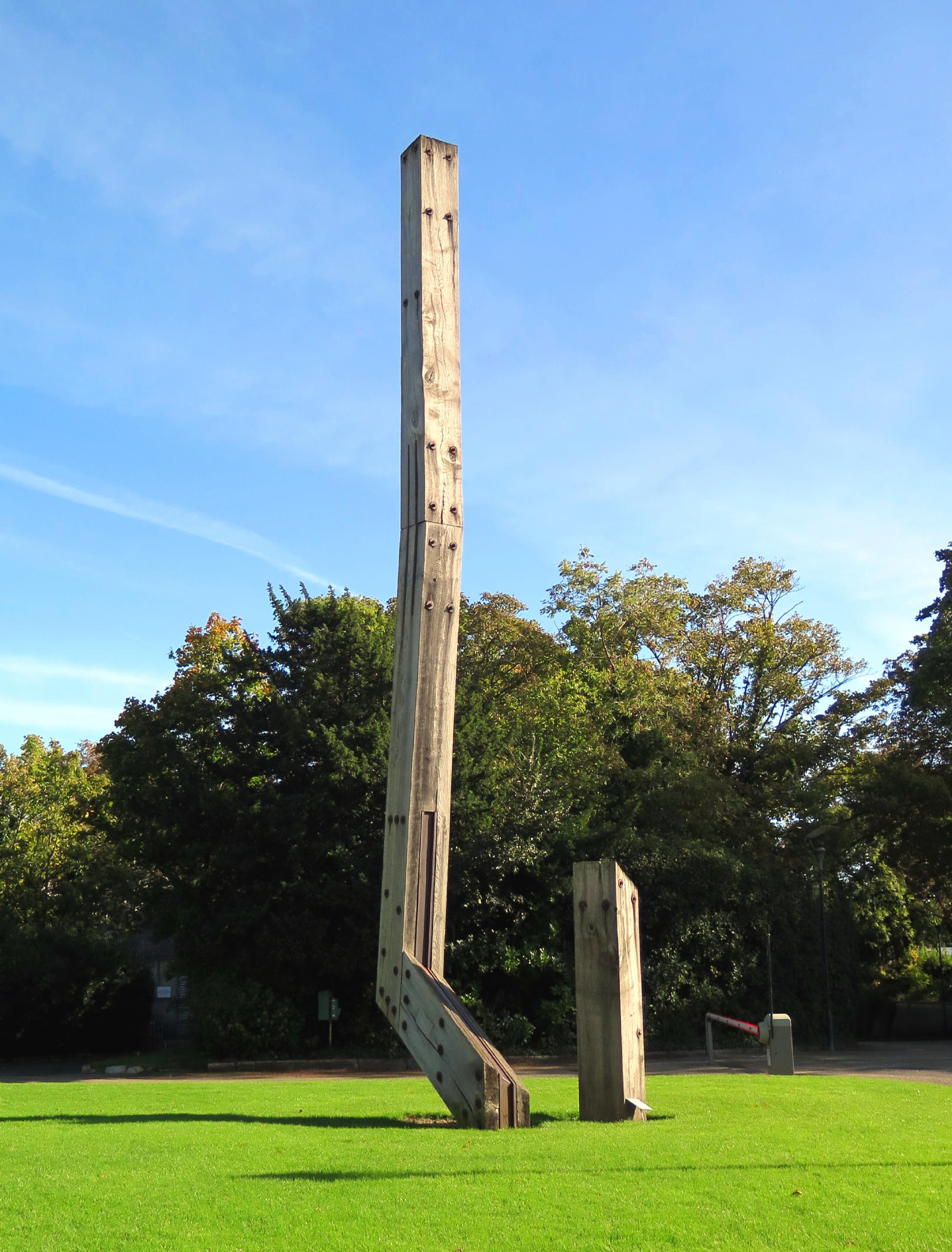
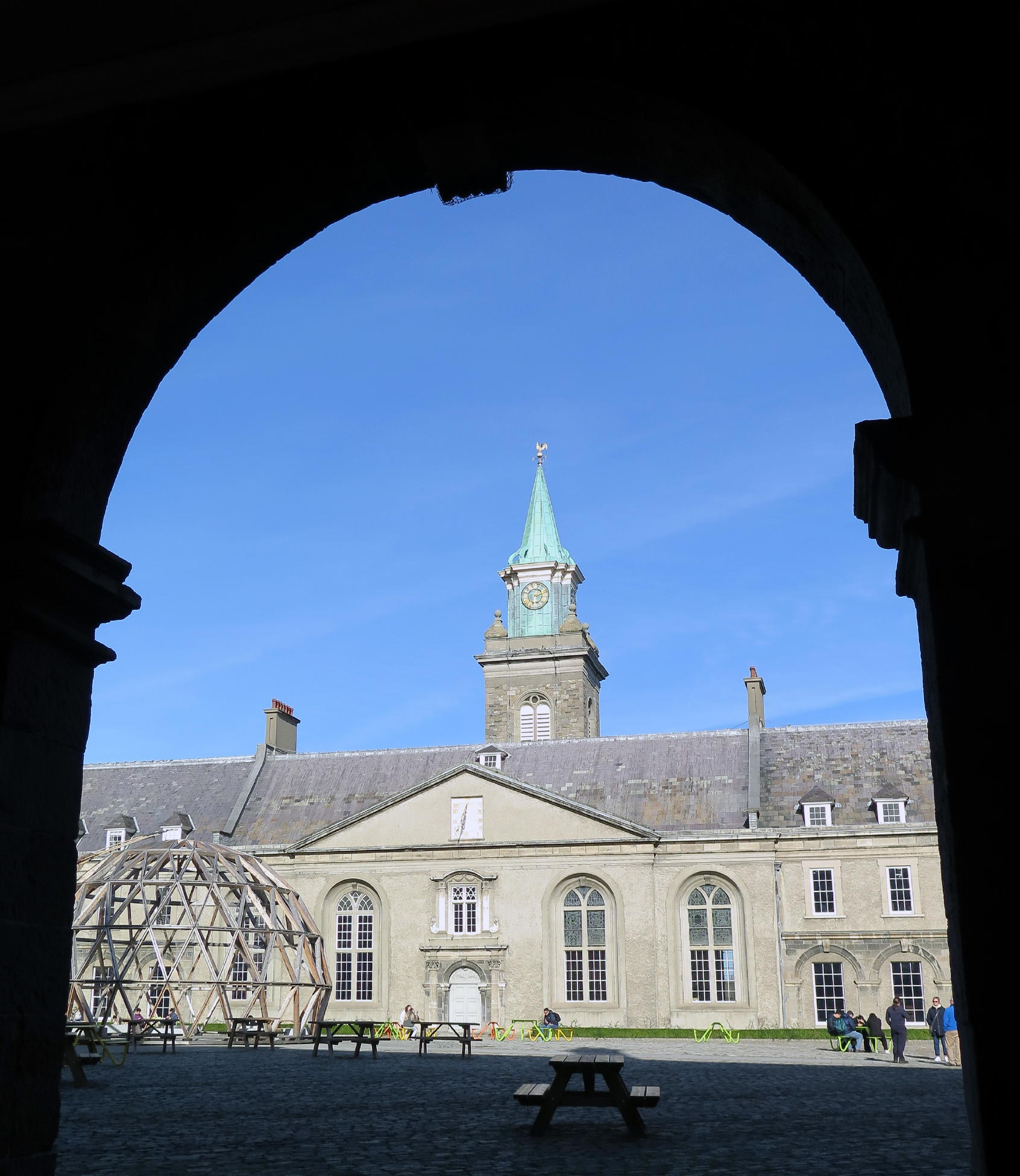
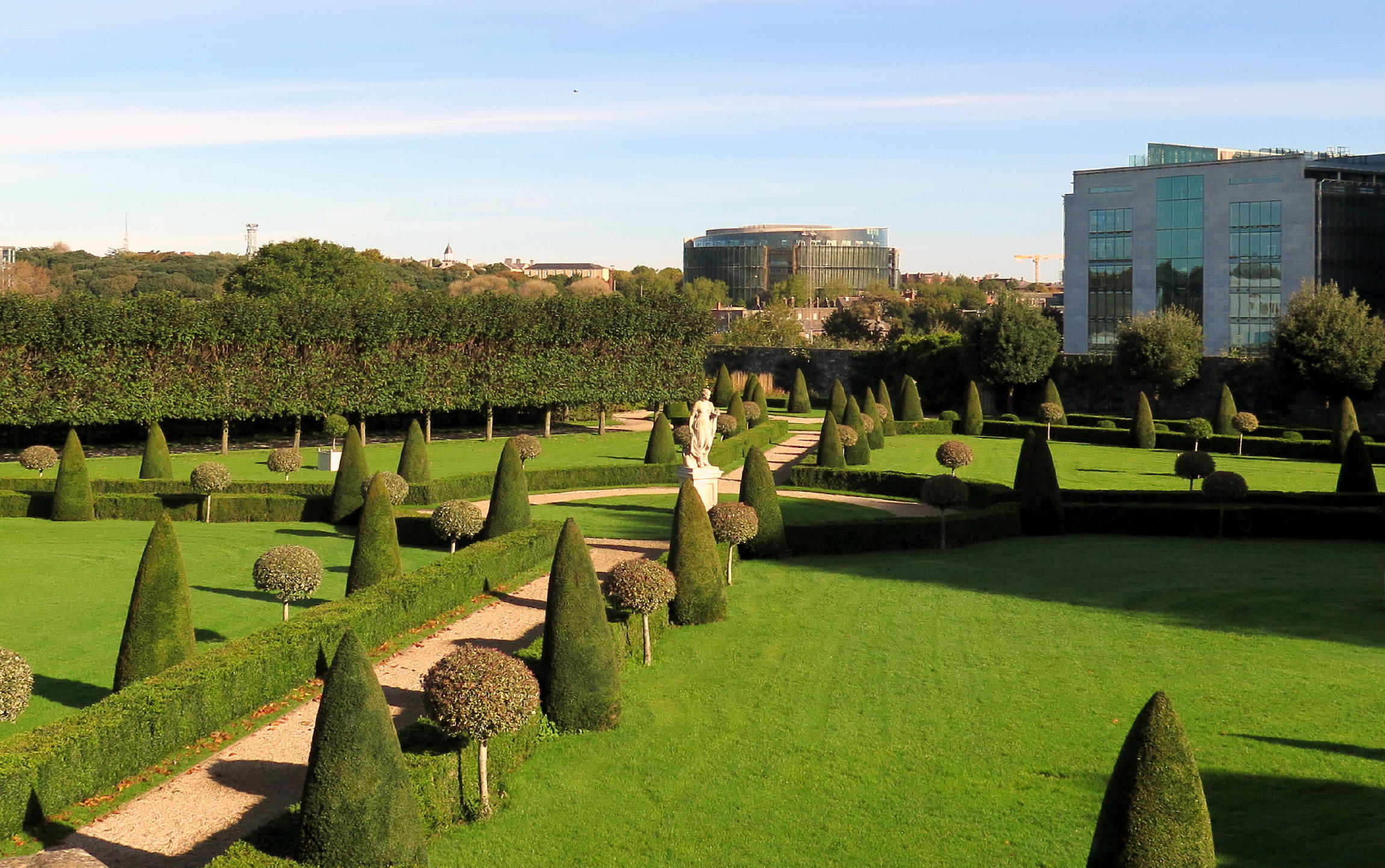
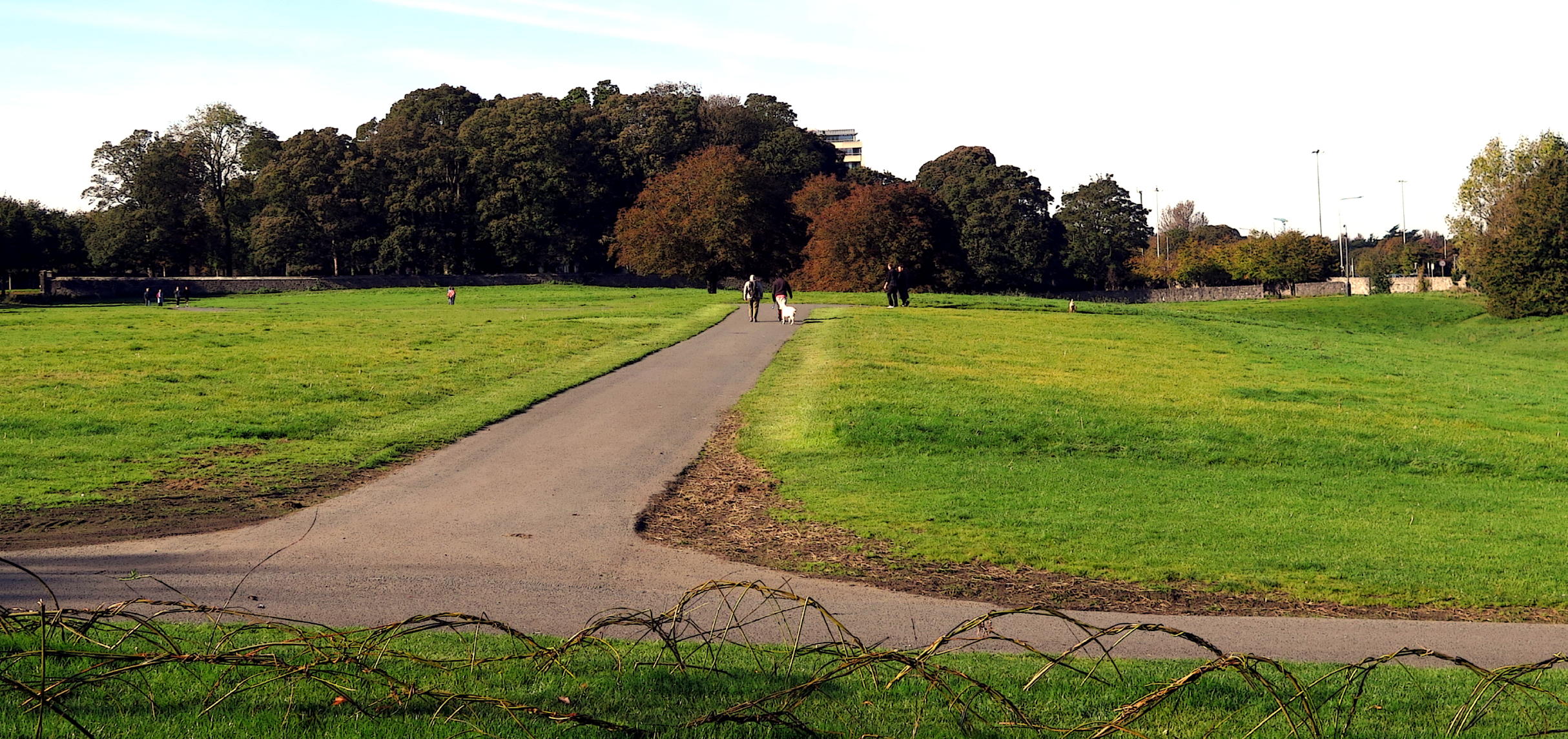
I walked 1/2 mile past the station, to check out the Museum of Modern Art, housed in an old military hospital. The property includes an attractive open-space public park.
|
|
Dublin |
|
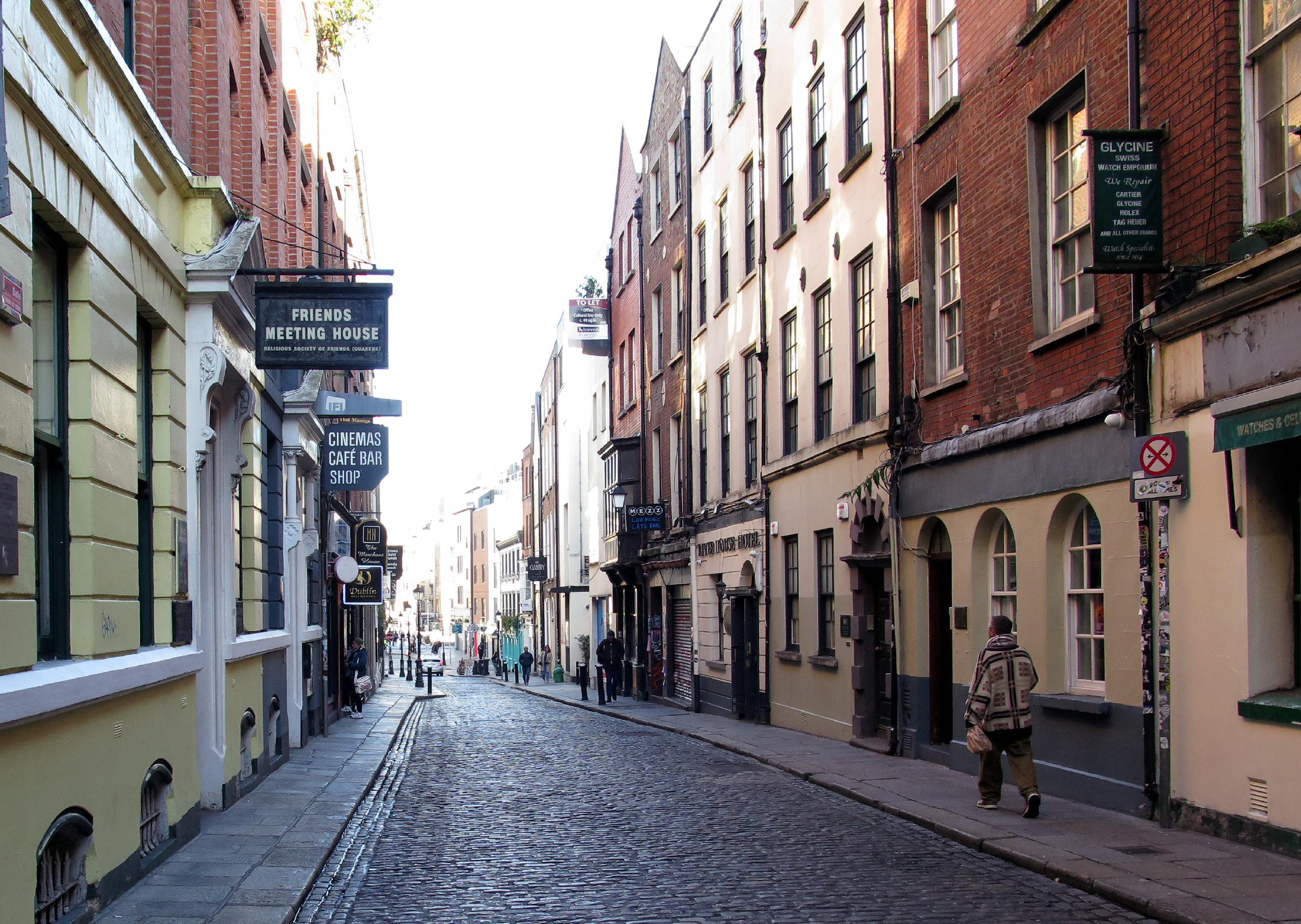
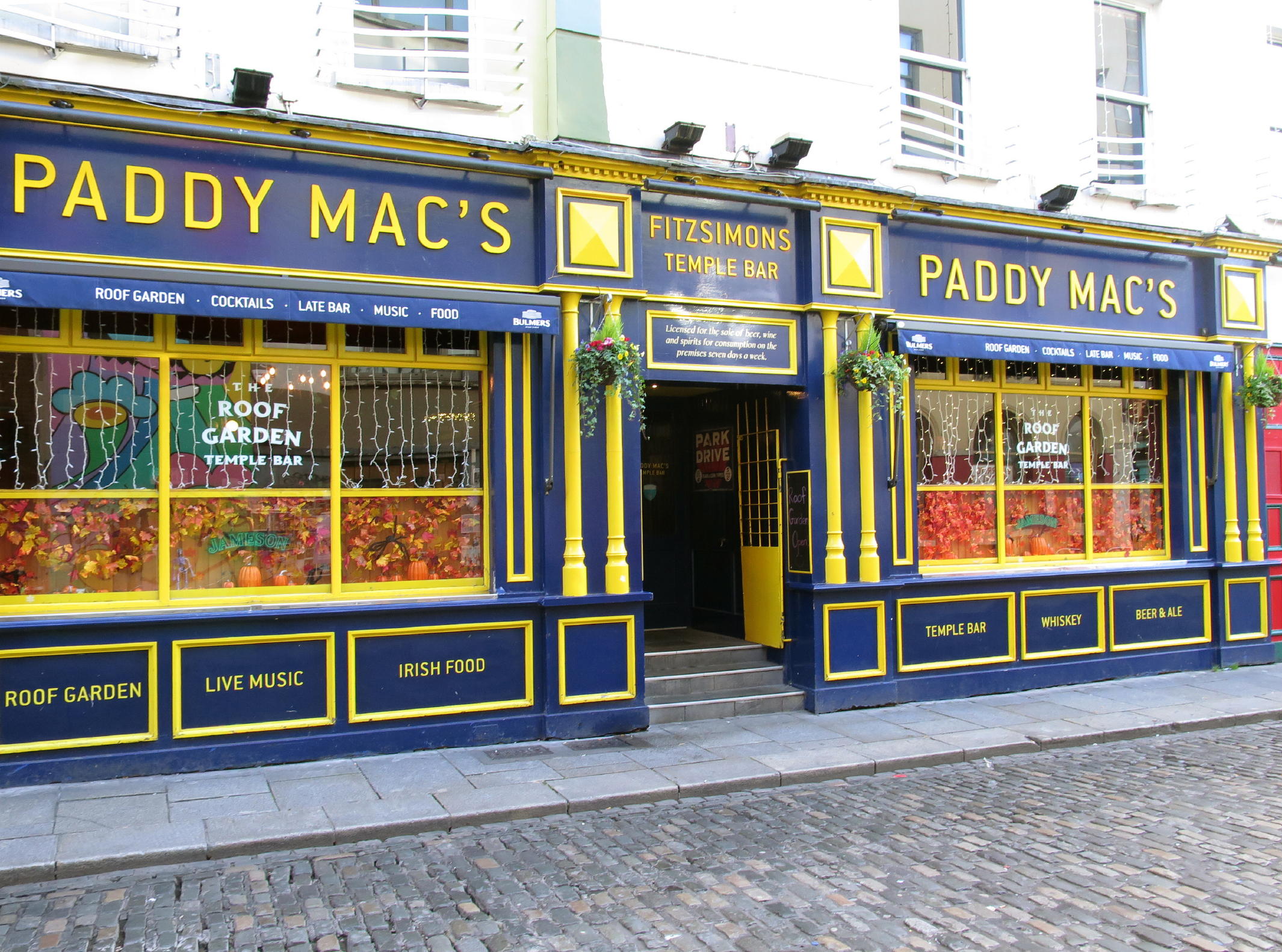
Temple Bar area |
|
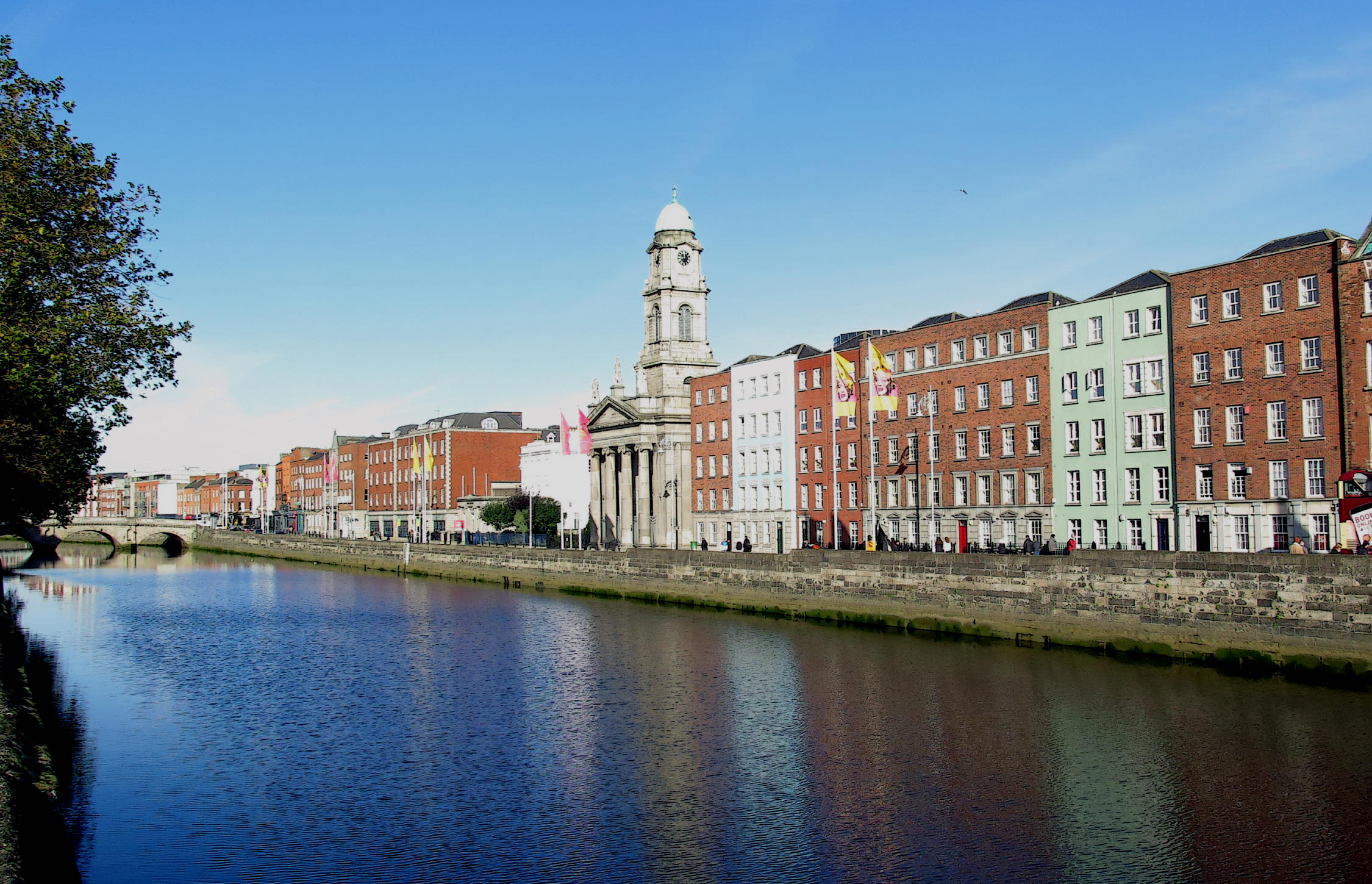
River Liffey, looking west | |
|
|
entrance to Heuston Station |
|
Museum of Modern Art |
|
WWI military convalescent hospital | |
|
|
back yard looking NE |
|
people walking dogs, looking west |
|
The Modern Art collection had only one artist's fabric works, which I didn't connect with, so I went back to the rail station, printed out tickets for tomorrow's train to Killarney, and then sat inside, with a Nero coffee, chatting with locals for 30 minutes.
The LUAS tram Red Line runs past Heuston Station, immediately crosses the Liffey and then runs east-west on the north side of the River. I switched to the Green Line at McConnell St. to head south, back across the Liffey, to the Trinity College stop. (The next LUAS stop after Trinity is Harcourt.)
My fare was only 1.27 Euros, and an unlimited daily pass is 5.8 Euros. I have to admit, I had thought in advance that it might be nice to ride the LUAS to it's farthest points, but being a weekend day it was packed with families & kids with bad colds.
I walked briefly through Trinity campus, just to have a first look and a friendly local (who seemed like a professor) showed me the south side exit, and then gave me directions to the Archeology Museum, based on the thee pubs I would pass, describing each in detail as to outer appearance. One had barrels & another was of brick, etc.
note - you can enlarge any part of a picture by left-clicking in and then out again (with some exceptions).
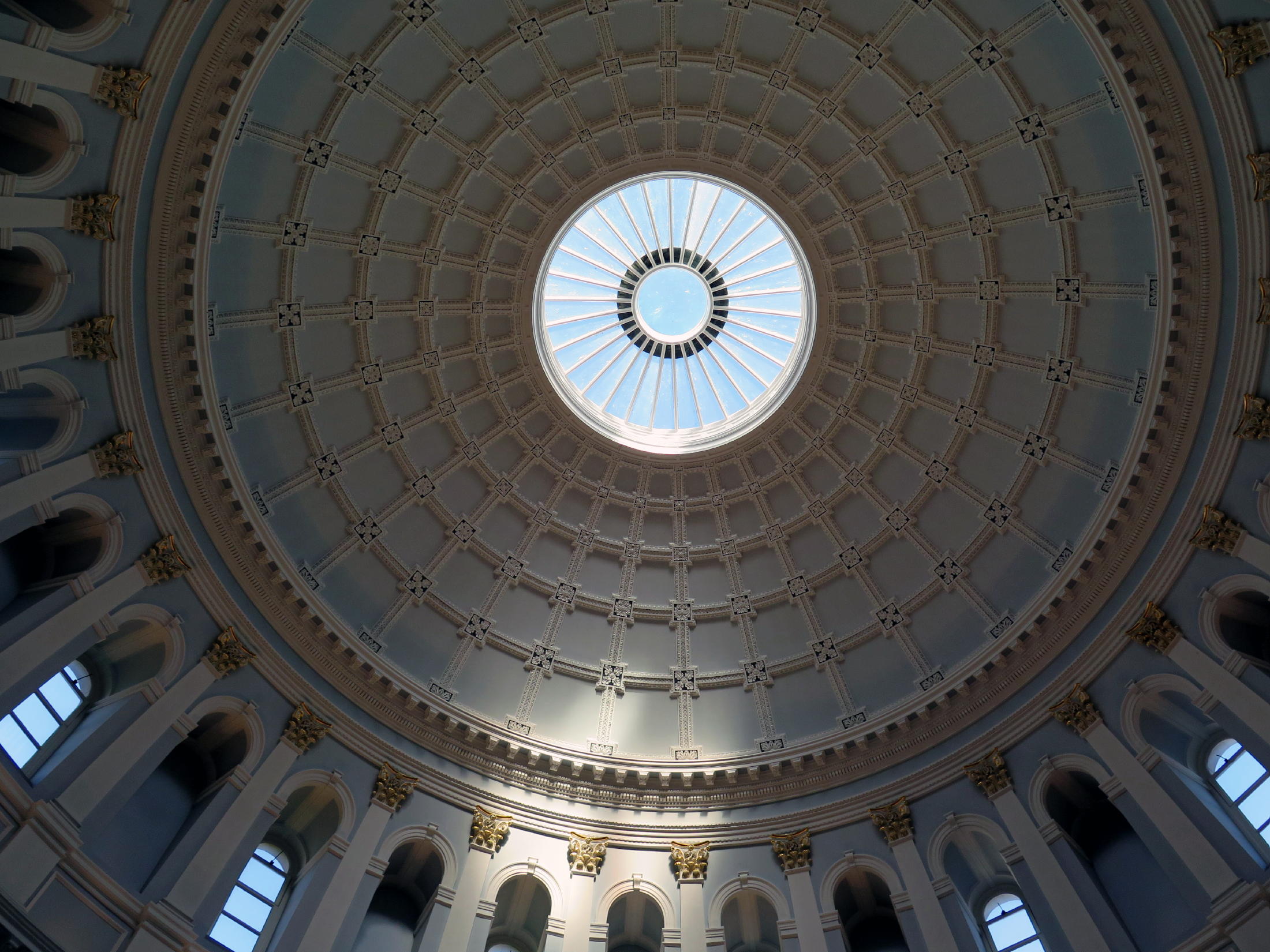 |
Archeology Museum entrance |
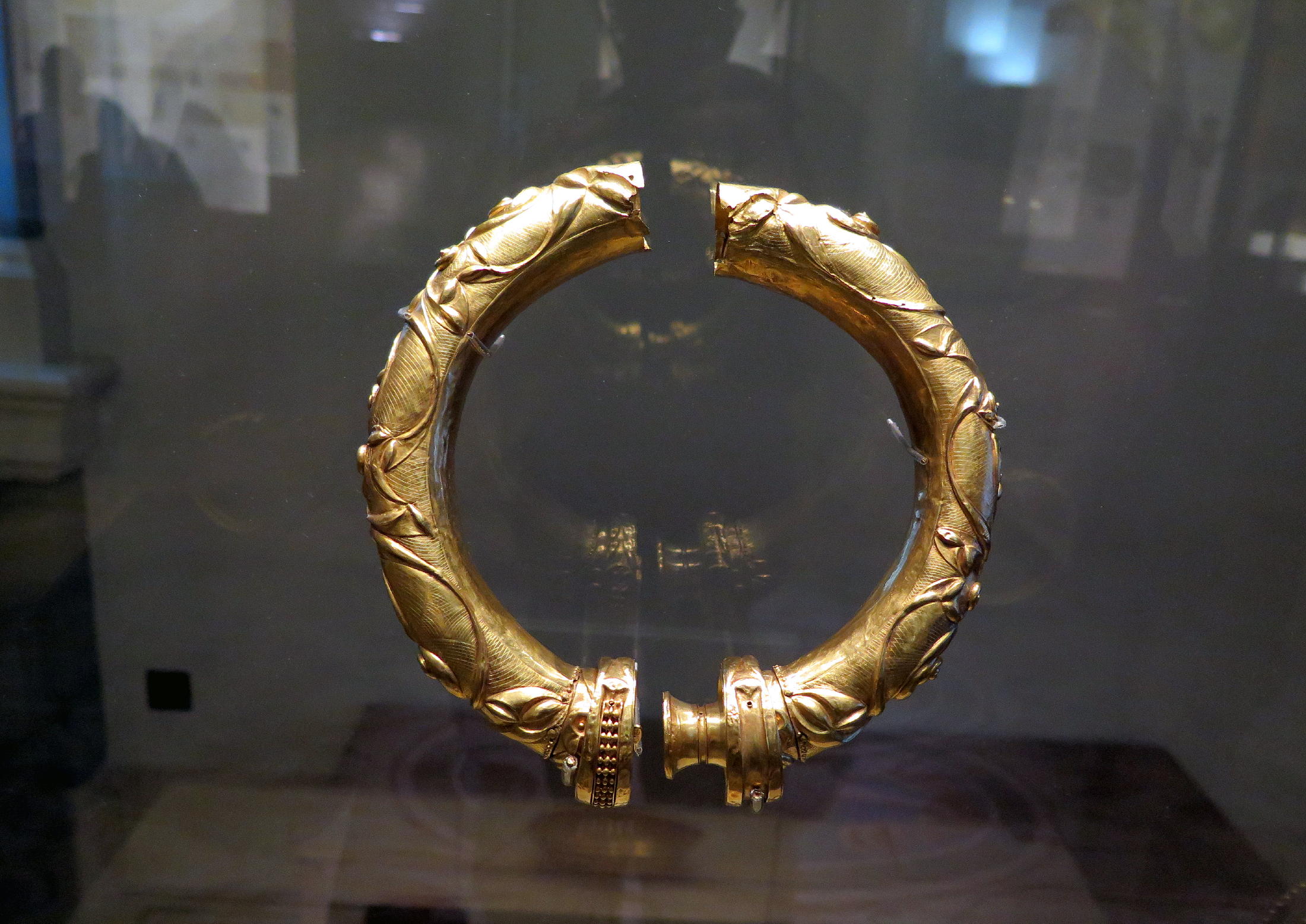 |
gold neck ornament from 1st century |
|
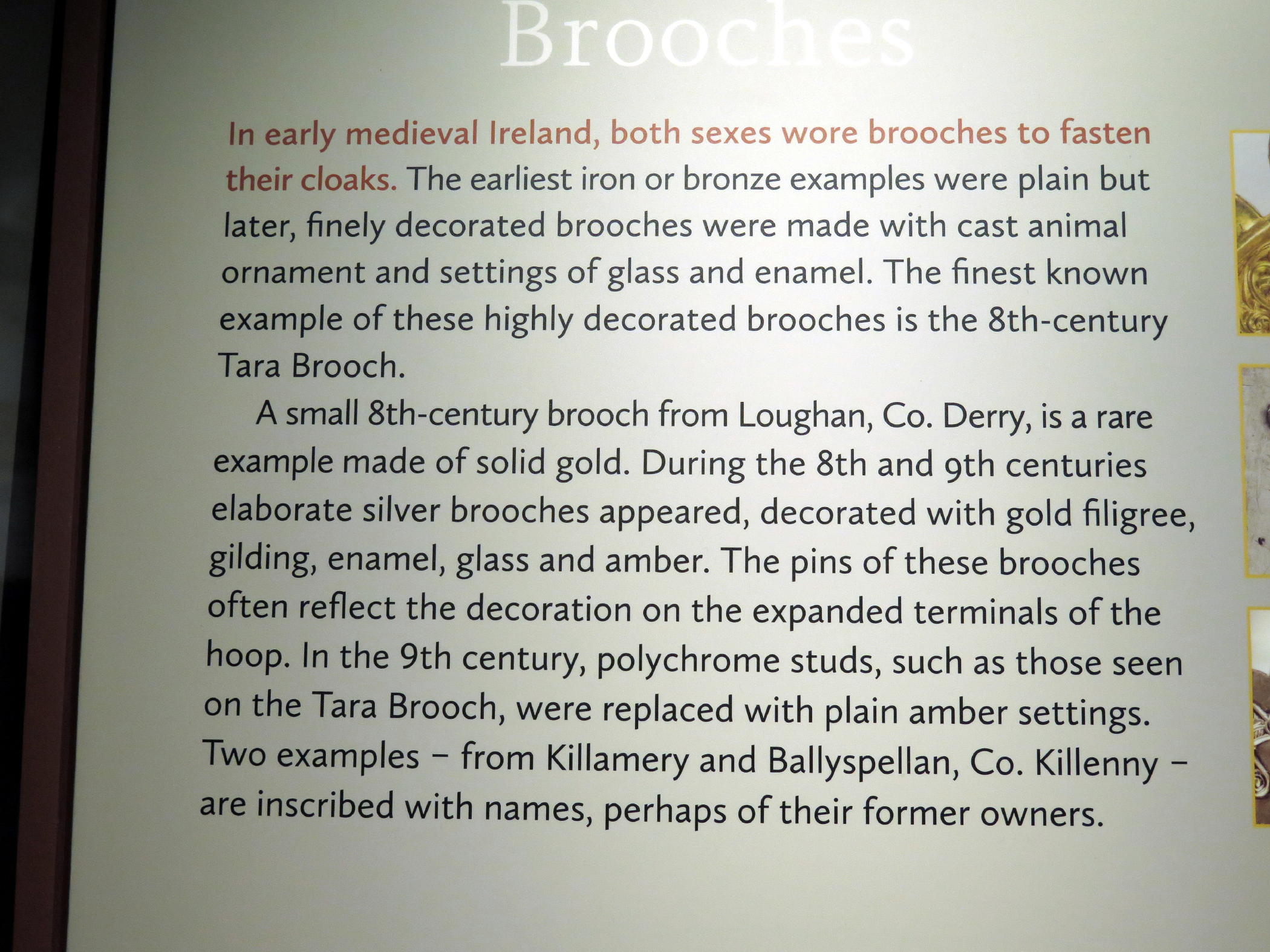
about Celtic brooches | |
 |
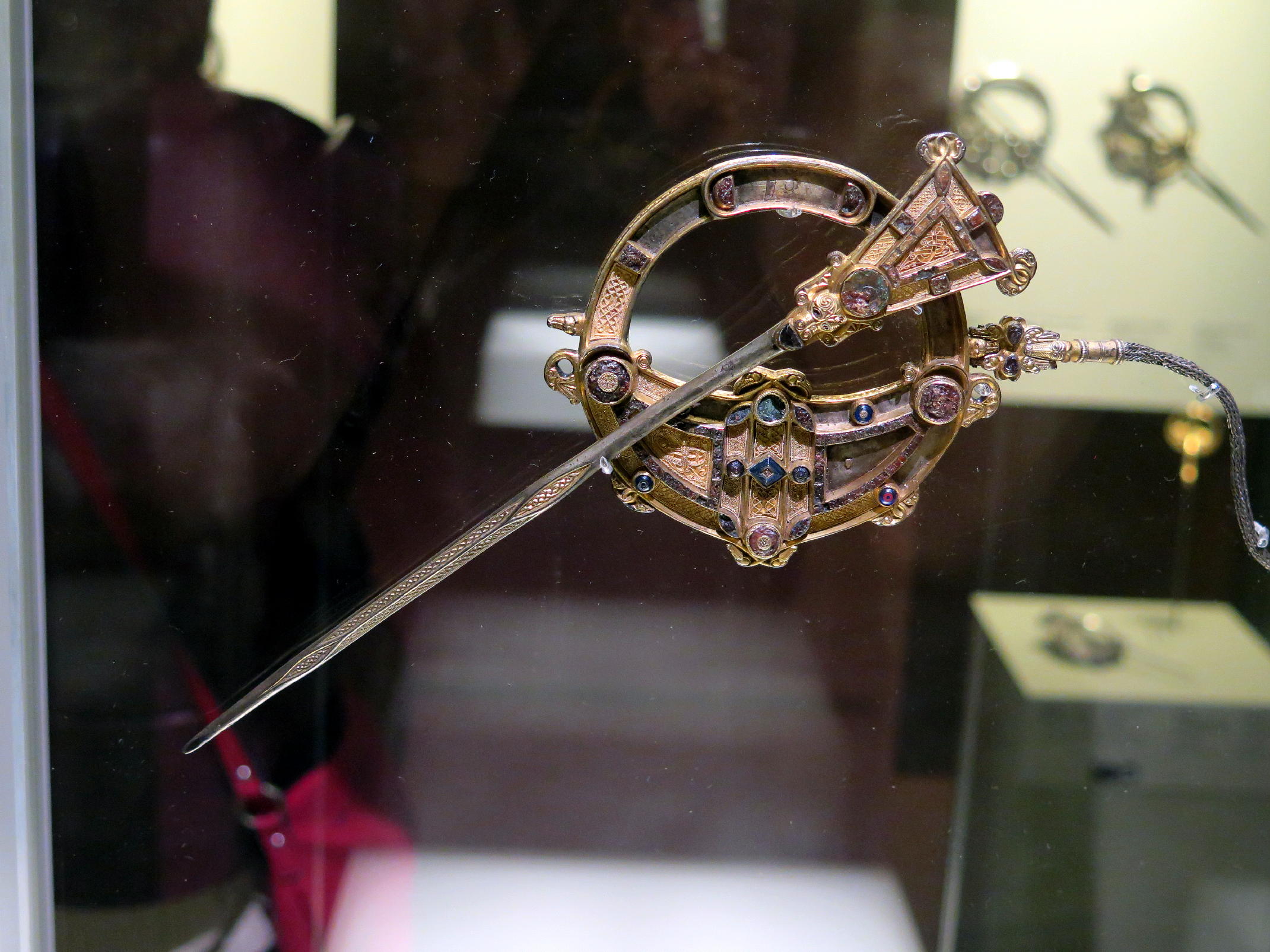 |
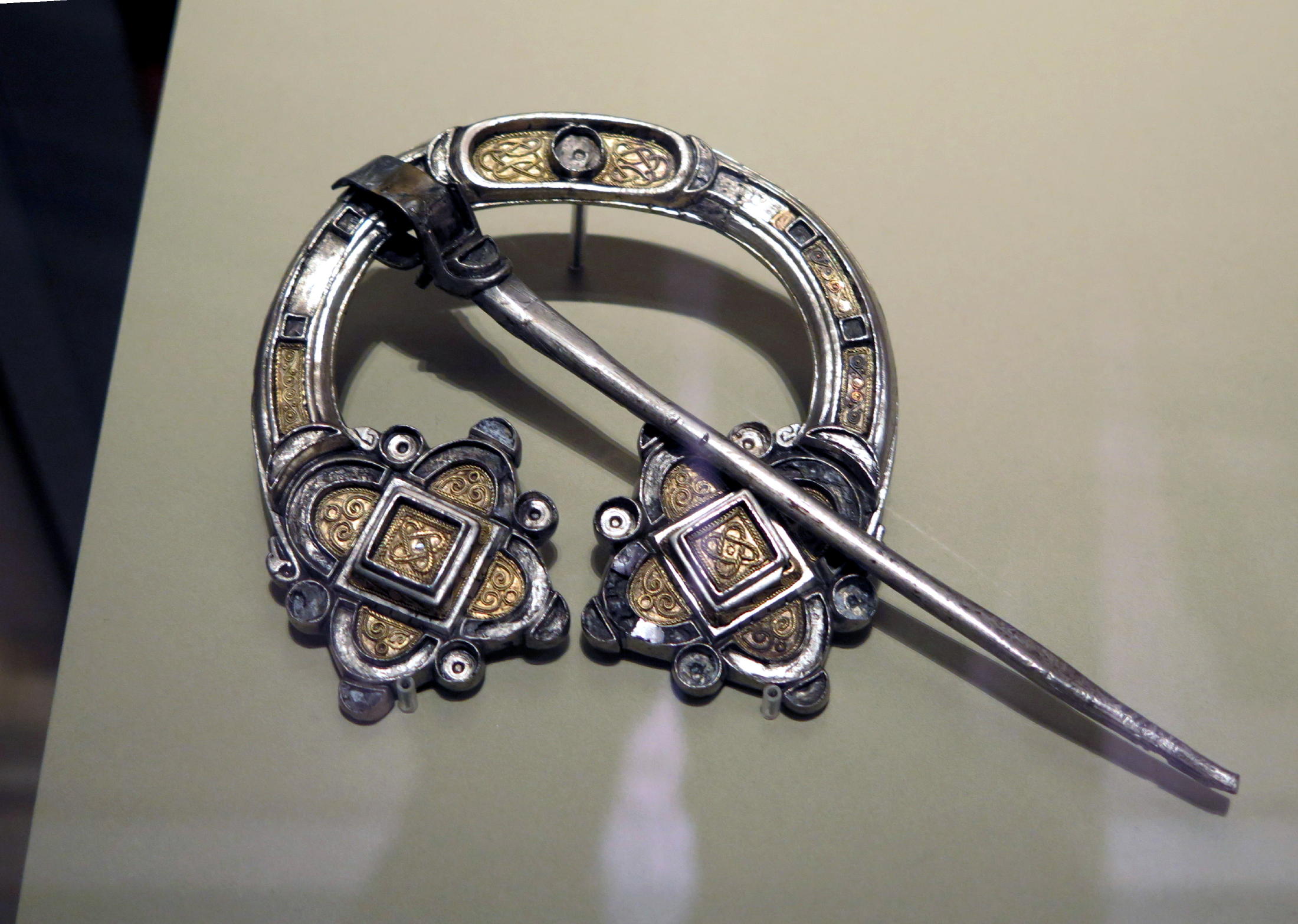
Tara brooch, a Celtic era treasure |
After an hour or more looking at antiquities in low-lighting rooms, I started to fade out. I walked for 15 minutes around the block to the National Gallery cafe for a scone & Americano, and again it helped.
Later I strolled through St. Stephens Green, near the lakes, but took no photos. Multi-ethnic & multi-generational families were out, enjoying a beautiful Sunday afternoon in Dublin, and I heard many languages being spoken.
I tried a different route back to the hotel & found a coffee shop with an amazingly good Portuguese pastry.
Later I enjoyed my third dinner at the Hotel, and was starting to feel recovered from the diurnal change. I was keeping a hand-written journal and had a good book to read, plus my wife and I texted early or late in the day.
After just two days of walking around, Dublin seemed so much smaller and easy to navigate. River Liffey flowing west-to- east through the middle of the City helps with basic orientation.
Dublin really IS a small City. From my pod room at Harcourt/Charlotte, everything worth seeing here was within 45 to 60 minutes of walking.
Go to next page - Dublin to Killarney
return to Ireland 23 index
return to mdimage index
Postscript - The Tara Brooch is an Irish Celtic brooch, from the 7th or 8th century, made of bronze, silver, and gold. It is decorated with 50 inserted panels with highly ornate filigree. It is widely considered to be the most complex & ornate Brooch of its kind, probably commissioned as a fastener for the cloak of a high-ranking Cleric, or, as a ceremonial insignia of high office, or even for a Celtic-era King of Ireland (from Wikipedia).
Go to next page - Dublin to Killarney